

 CoinFo_Admin
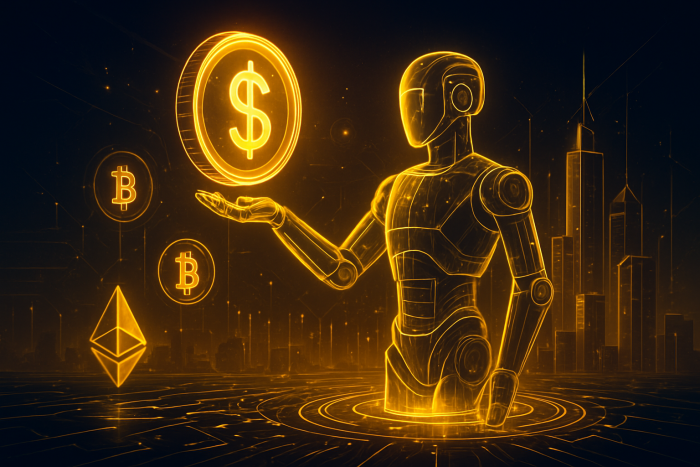
 As blockchain infrastructure matures, a new category of digital economic actors is beginning to rise—Autonomous Liquidity Agents (ALAs). These are not simply smart contracts or algorithms; they are self-optimizing on-chain entities capable of reallocating liquidity, executing yield strategies, and interacting with multiple protocols without the need for human oversight. Their emergence hints at a future where liquidity doesn’t simply move across networks—it thinks, learns, and reacts.
Today, liquidity is still fundamentally user-driven. Investors choose where to deposit capital, protocols offer incentives, and bridges shuttle assets between ecosystems. But this model is increasingly strained by three forces:
-
The fragmentation of liquidity across dozens of chains.
-
The increasing complexity of yield opportunities.
-
The speed at which market conditions shift.
Autonomous Liquidity Agents represent a new solution—one that replaces manual capital allocation with a dynamic, self-governing system.
What Exactly Is an Autonomous Liquidity Agent?
An ALA is a smart-contract-based entity enhanced by machine-driven logic (not off-chain AI) that manages liquidity positions in real time. It receives a mandate—e.g., “maximize stablecoin yield with low volatility” or “maintain optimal liquidity depth for asset X”—and executes on that mandate through automated decision-making.
Unlike traditional yield optimizers, ALAs:
-
Can interact with multiple protocols concurrently.
-
Can rebalance positions based on predefined triggers.
-
Can route liquidity across different networks using secure messaging layers.
-
Can operate with near-zero maintenance once deployed.
Think of them as the first generation of “digital liquidity workers”—autonomous agents that perform tasks previously handled by analysts, market makers, or treasuries.
Why Are ALAs Emerging Now?
Three developments are converging to make ALAs possible:
1. Cross-chain message layers have matured
Interoperability solutions no longer merely bridge tokens—they transmit intents, state updates, and smart-contract calls. This allows an ALA on one chain to execute actions on another.
2. On-chain execution environments are now composable
Modular architectures allow liquidity strategies to tap into lending, swapping, restaking, and derivatives protocols without integrating bespoke code each time.
3. Risk controls can now be encoded natively
Thanks to improvements in smart-contract tooling, ALAs can include guardrails such as max slippage, portfolio caps, asset whitelists, and dynamic withdrawal triggers.
These advancements push liquidity automation beyond simple vaults into fully coordinated cross-protocol agents.
What Problems Do ALAs Solve?
Fragmented Liquidity
Instead of relying on users to migrate liquidity from one chain to another, ALAs shift capital automatically toward the best opportunity—reducing idle liquidity and improving market depth.
Inefficient Yield Capture
Manual rebalancing is slow. ALAs can monitor conditions every block and reallocate instantly.
Treasury Management Bottlenecks
DAOs can assign ALAs to safeguard treasury assets, manage stable reserves, or run low-risk strategies without needing constant governance votes.
Liquidity Provider Burnout
Human liquidity managers cannot track 24/7 volatility, new incentives, slippage dynamics, or cross-chain risk—but ALAs can.
How ALAs Could Reshape DeFi and Institutional Crypto
The implications are significant:
For DeFi protocols:
Markets become more efficient as liquidity densifies around real usage rather than yield-chasing behavior.
For institutions:
Funds can deploy capital into programmable, rules-based agents that execute their mandates transparently and continuously.
For blockchain ecosystems:
Chains that integrate ALA-friendly infrastructure could attract liquidity without relying solely on incentives.
For users:
Complex strategies become accessible—even if someone has no expertise in market making or yield optimization.
The Road Ahead
Autonomous Liquidity Agents will not replace traditional liquidity providers, but they will augment them—bringing a level of speed, precision, and coordination that humans simply cannot match. As these agents evolve, we may see networks where liquidity not only moves automatically, but also collaborates, competes, and negotiates on behalf of its owners.
The arrival of ALAs marks a shift from static liquidity to living liquidity—a dynamic and intelligent layer powering the next era of decentralized finance.