

 CoinFo_Admin
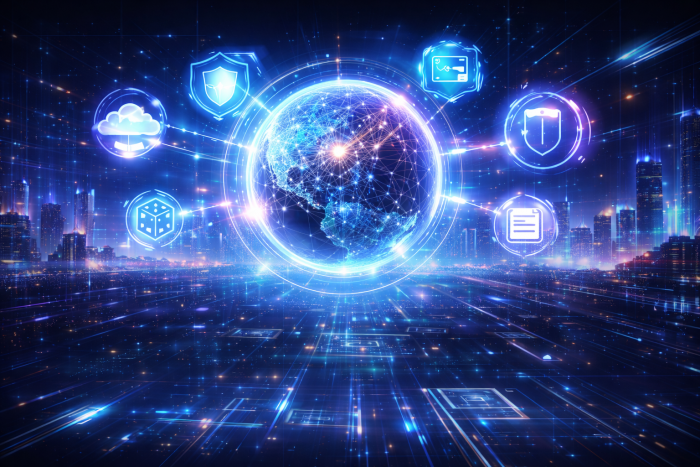
 For years, decentralized oracles have been quietly framed as a supporting actor in crypto infrastructure, largely associated with price feeds for DeFi protocols. That framing is now outdated. Oracles are no longer just messengers of market data; they are becoming the connective tissue between blockchains and the real world. As decentralized systems mature, oracles are evolving into programmable gateways that allow smart contracts to respond to events, identities, probabilities, and outcomes that exist far beyond token prices.
At their core, blockchains are deterministic machines. They are excellent at executing logic based on inputs already on-chain, but they are blind to anything happening outside their closed environment. Oracles solve this limitation by securely introducing external data into smart contracts. What’s changing today is not the concept of oracles, but their scope. Instead of answering a single question—“What is the price of ETH?”—modern oracle systems answer a far broader one: “What just happened in the real world, and how should code react to it?”
One of the clearest examples of this shift is insurance. Parametric insurance products rely on objective, verifiable events rather than subjective claims processes. Weather data, flight delays, shipping arrivals, or seismic activity can be streamed via decentralized oracles directly into smart contracts. When predefined conditions are met, payouts are executed automatically. There are no adjusters, no paperwork, and no delays. The oracle becomes the trigger that transforms insurance from a promise into executable logic.
Identity is another frontier where oracles are quietly reshaping the stack. Decentralized identity systems still need to verify credentials issued by governments, institutions, or trusted entities. Oracles can attest to off-chain identity proofs without exposing sensitive personal data on-chain. This allows smart contracts to enforce compliance, access control, or jurisdictional rules while preserving privacy. In practice, this bridges Web3 applications with regulatory and institutional realities rather than trying to bypass them.
Randomness is a less visible but equally critical domain. Many decentralized applications—from gaming to NFT minting to validator selection—depend on unpredictability. Blockchains alone cannot generate true randomness without risking manipulation. Oracle-based verifiable random functions introduce cryptographically provable randomness that can be trusted by all participants. This turns chance itself into a composable primitive for decentralized systems.
Automation is where these capabilities converge. Oracles do not just deliver data; they increasingly monitor conditions and initiate actions. Treasury rebalancing, liquidation protection, yield optimization, and governance execution can all be automated through oracle networks that continuously observe both on-chain and off-chain states. This reduces operational overhead and human intervention, making decentralized systems more resilient and scalable.
The expanding role of oracles also unlocks composability across protocols and industries. A single oracle input can cascade through multiple smart contracts, triggering financial settlements, governance changes, and application logic simultaneously. This creates a shared reality layer for Web3, where independent protocols coordinate based on the same external truths.
The table below illustrates how oracle use cases have expanded beyond their original financial role:
| Oracle Use Case | External Data Source | On-Chain Outcome |
|---|---|---|
| Parametric Insurance | Weather, flight, logistics APIs | Automatic claim payouts |
| Decentralized Identity | Government or institutional records | Access control and compliance checks |
| Verifiable Randomness | Cryptographic randomness generation | Fair gaming, NFT minting, validator logic |
| Automation | On-chain and off-chain state changes | Smart contract execution and rebalancing |
| Composability | Multi-source real-world data | Cross-protocol coordination |
As oracle infrastructure matures, trust shifts from individual intermediaries to cryptographic guarantees and decentralized consensus. This is not about removing the real world from blockchain systems, but about integrating it more precisely.
“Oracles are not just data providers; they are the translation layer that allows decentralized systems to understand reality.”
For institutional players and treasury teams, this evolution matters. Oracles determine how reliably smart contracts can mirror real-world obligations, risks, and opportunities. As decentralized finance expands into insurance, identity, automation, and governance, oracles will increasingly define what is possible—and what is trustworthy—on-chain.
At CoinForge Capital, we see decentralized oracles not as infrastructure plumbing, but as strategic enablers. They are the mechanism through which blockchains stop being isolated ledgers and start behaving like adaptive systems connected to the world they aim to transform.