

 CoinFo_Admin
 1. The evolving role of enterprise treasuries
Traditionally, corporate treasuries have managed cash-flows, FX risk, intercompany loans, and banking relationships. But in an increasingly globalised and digital world, two challenges loom large:
-
Cross-border payments friction: delays, opaque FX costs, correspondent-bank fees.
-
Liquidity fragmentation: multiple bank accounts in different currencies, regulatory burdens, slow settlement.
Now, digital-asset rails and stablecoin frameworks offer a new paradigm: faster settlement, borderless value transfer, programmable money. For a business using a crypto-OTC desk and global payment solutions (as CoinForge Capital does) the question becomes: how do you integrate these rails into treasury strategy?
2. Stablecoins & corporate treasury usage
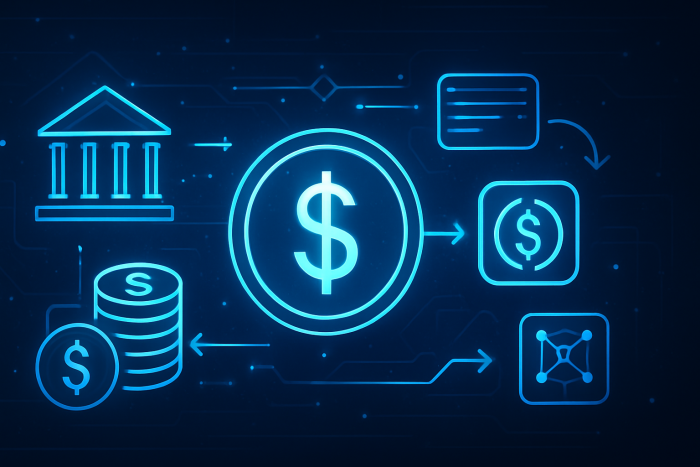
Stablecoins (for example, USDC) are increasingly used as a bridge between fiat and crypto worlds. They can offer:
-
Near-instant settlement around the clock.
-
Lower pre-funding requirements (versus legacy FX corridors).
-
Transparency, global reach, and integration potential into Web3/DeFi ecosystems.
For an enterprise treasury, this means you could:
-
Move funds between entities instantly in one “digital dollar” form, then convert into local fiat as needed.
-
Reduce reliance on time-zones and banking cut-offs.
-
Build a hedge position around stablecoins rather than just bank deposits.
3. OTC crypto desks + treasury integration
Here’s where CoinForge Capital’s core service becomes a bridge. The business model of providing OTC, international payments and deep-liquidity solutions for enterprises positions the company to help firms transition their treasury operations onto crypto payment rails without sacrificing trust, security or compliance (which are essential for enterprise treasuries).
Key considerations for integration:
-
Liquidity access: Ensuring deep markets so large treasury flows don’t move the market.
-
Counterparty risk & settlement: OTC desks need to provide settlement guarantees, audit trails, banking integration.
-
Regulatory & compliance layer: Treasuries operate under internal controls, audit, risk frameworks; crypto rails must integrate into those.
-
Treasury dashboards & real-time visibility: With crypto rails you can get near real-time movement; integration into treasury dashboards is crucial.
-
Cost/benefit analysis: Compare legacy FX & bank fees vs stablecoin rails + settlement + on-ramp/off-ramp costs.
4. Use-case examples
-
Global payroll & intercompany settlements: A company with affiliates in multiple jurisdictions could send a stablecoin from HQ, have local affiliate convert to local fiat via local OTC partner, reducing FX corridors.
-
Working capital optimisation: Instead of sitting idle in low-yield local bank accounts, holding some exposure in a stablecoin or digital-asset-based liquidity pool might improve yield/efficiency (while controlling risk).
-
Hedge for FX & timing-risk: Using digital-asset rails to shift value ahead of anticipated FX movements or payment obligations; treasuries could design “digital dollar bridge” tranches.
-
Cross-border M&A or venture activity: Quickly transferring funds between jurisdictions for acquisitions without the classic bank-cut-off delays.
5. Risks & what to watch
-
On-ramp / off-ramp liquidity: If a treasury is large, converting stablecoins back to fiat in local currency may have limited partners or higher spreads.
-
Regulatory uncertainty: Many jurisdictions still developing frameworks for stablecoins, crypto liquidity providers, etc. This imposes compliance risk.
-
Counterparty & custodian issues: Holding large digital-asset exposures means you need trusted custodians, audited reserves, liability management.
-
Operational risk and internal processes: Treasury teams are used to banks; adding crypto-rails means updating internal policies, accounting treatments, reporting, audit.
-
Volatility and perceived risk: Even if stablecoins are pegged, perceptions around them may carry reputational risk for corporate boards.
6. How enterprises should start
-
Pilot tranche: Identify a region where you have frequent cross-border payments and run a pilot via stablecoin/OTC rail.
-
Establish governance: Set clear internal policies on what asset types are allowed, who approves crypto-rail transactions, hedging scope, counterparties.
-
Partner selection: Choose an OTC desk or solution provider (like CoinForge Capital) that can provide liquidity, settlement, fiat conversion, regulatory oversight.
-
Integration with treasury tech: Ensure your treasury management system (TMS) can handle digital-asset ledgers or at least feed data properly.
-
Measure outcomes: Cost savings, settlement time reductions, FX risk reduction, liquidity flexibility. Use these metrics to expand.
7. The future outlook
As stablecoin ecosystems mature, central bank digital currencies (CBDCs) begin to roll out, and DeFi liquidity becomes more enterprise-grade, treasuries will increasingly view “digital money rails” as mainstream. The early adopters will be large corporates with global operations, significant cross-border flows, and the internal governance to manage new asset classes.
For a company like CoinForge Capital, positioning as the gateway between traditional treasury and crypto rails is a strategic advantage: you’re speaking in enterprise terms (speed, confidentiality, deep liquidity), not just retail crypto.
Conclusion
In summary: Corporate treasuries are no longer just about bank accounts and FX derivatives. The emergence of stablecoins and crypto payment rails presents a real opportunity for cost reduction, speed, liquidity optimisation and global reach. For firms working with an OTC desk and specialised payments partner (such as CoinForge Capital), integrating these new rails into treasury management is not just a novelty—it’s becoming a strategic move.
By adopting a structured pilot, aligning governance, and measuring outcomes, enterprises can shift from legacy corridors to near-instant, borderless value transfer—while maintaining the levels of security, compliance and customisation they require.